Connecting Communities – Commuter Rail
Reflections on commuter rail in Greater Christchurch – with Julie Anne Genter and Mike Davidson

While this panel consisted of Green Party MPs Julie Anne Genter and Mike Davidson, these comments and opinions should not be taken to represent the official positions of those persons or the Green Party of Aotearoa New Zealand on these topics. This is a personal recollection of the issues discussed at this panel.
I had the pleasure a few weeks back of being a panellist alongside Julie Anne Genter and Mike Davidson, two Green Party Members of Parliament, to discuss the options and future of commuter rail here in Ōtautahi Christchurch.
Below, I’ve summarised some of the discussions that we had and some of my views, alongside my perspective on some of the other important points raised by the other panellists.
Comments around Mainland Rail
Unsurprisingly, one of the topics that came up was the recent announcements by Mainland Rail to operate a “match-day” service from Rangiora and Rolleston to events at Te Kaha One New Zealand Stadium.
For something that was announced several months ago now, there is comparatively little public information available about the service, its operations, or its operating model. While this isn’t necessarily a deal breaker, it does leave a few big questions.
What will this service cost?
A service operating on a very limited schedule with no public subsidies is a service that could prove to be very costly to run. As a private venture, Mainland Rail will have to absorb all costs of operating and maintaining the rolling stock in house. There will be access costs to the national rail network, and given the irregular services, one has to ask what this service will cost to operate.
That question extends to another - What will a ticket cost for a passenger?
Without a subsidy, the ticket cost could be somewhat eye watering. And for a service that needs to be competitive to survive, that could turn a number of potential users off.
How will Mainland Rail overcome the infrastructure issues?
Speaking of competitive, I have to wonder about the physical route plans for the service. The current station site in Addington is not fit for purpose (in general but also for this specific service) if you want to compete with private motor vehicles.
A quick Google search places the current station at Addington as a 50-60 minute walk from the Stadium site. Without a supporting service, that time cost will have to be accounted for in any persons travel. By comparison, the former station site on Moorhouse Ave clocks in at a fairly reasonable 10-15 minute walk.


I’ve already addressed some of my concerns in a previous article, but there are significant limitations to accessing the central city.

That’s the first problem.
You could be forgiven for not knowing about the accessibility issues with Rolleston Station, or the upcoming major works on State Highway 1 outside Rolleston. But these will present significant access issues in the 2026-27 period for anyone wanting to access the station site.
In fact, the proposed designs retain nearly no access to the station except via SH1. Want to walk? The crossing lights are set to be removed as part of the Rolleston Access Improvements. With no path leading from the proposed overbridge to the station, no access to the station from the other side of the tracks, or any paths set to be installed to Hoskyns Road, Rolleston’s station will be essentially inaccessible to anyone not driving a car in a years time.
In fact, NZTA appears not to have taken any considerations for access into account in the publicly available documents on their website. One wonders how a service can operate from a station that can not be accessed?
Thoughts around Regional Connections
One of the principal reasons for this panel was to discuss the return of regional services in the South Island.
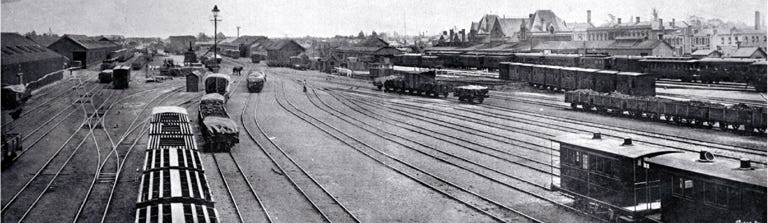
The East Coast of the South Island is especially suitable for regional rail services, given every major town between Ōtautahi Christchurch, Ōtepoti Dunedin, and Waihōpai Invercargill sits upon the Main South Line. As late as 2002 the famed “Southerner” service still plied its way between these cities, connecting rural communities with the regional urban centres for a reasonable price.
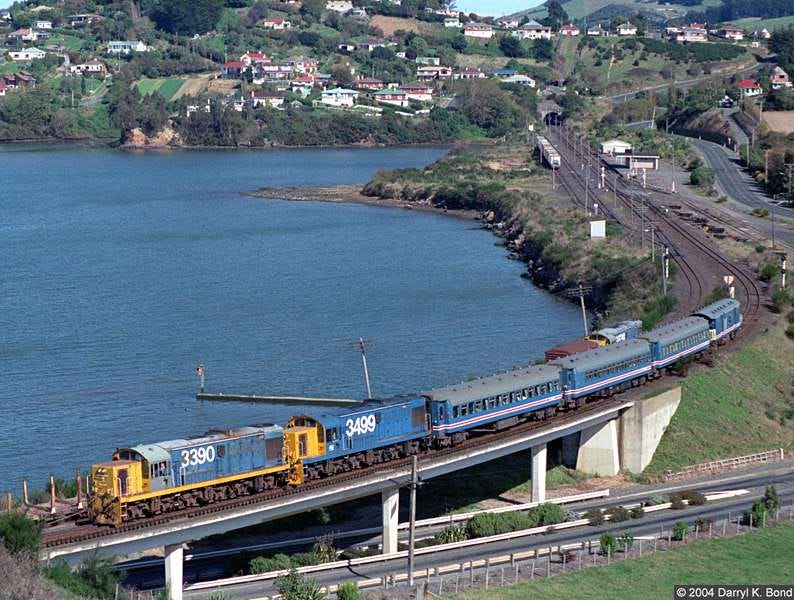
That has not been the case in nearly a quarter of a century now. Even services that have remained like the TranzAlpine and Coastal Pacific are now exorbitantly expensive. I’ve covered my thoughts on other services in places like the US, which operate a much longer service for an equivalent or cheaper price with better connections.

The truth is, there are no real barriers to the return of regional rail in the South Island except those put in place by our politicians.
In a country that possesses some of the highest emissions per capita, a primary industry oriented export economy, and an aging regional population, we have a transport network that is time-consumptive, and relies on all having equal access to private motor vehicle: something we know is not possible.
Our regional ‘capitals’ in the lower South of Christchurch Ōtautahi, Dunedin Ōtepoti, and Invercargill Waihōpai lack a modern and efficient connection that’s accessible to all. Regional commuters share increasingly degraded roads with larger trucks, and freight is increasingly forced into urban road corridors while rail remains underutilized.
That can’t be good for our economy or our people. Changing this status quo will have incredible impacts for our society, if we can make it happen.
Who do I think should be in charge?
First of all, KiwiRail needs to go. And I don’t say that lightly, or without some idea of what has to replace it.
KiwiRail as an operator has taken advantage of the public and failed to provide the service a modern country should expect from a publicly owned rail operator. I’ve previously written about this, but most of this comes down to the State-Owned enterprise model that KiwiRail has been forced into since its creation.

KiwiRail possesses all the worst elements of nationalised and privatised models and none of the benefits.
Its outdated, out of line with international standards around services provision, fails to be innovative or forward thinking, and chases its balance sheet at all costs.
If we want a real shot at rail, we need a new operator.
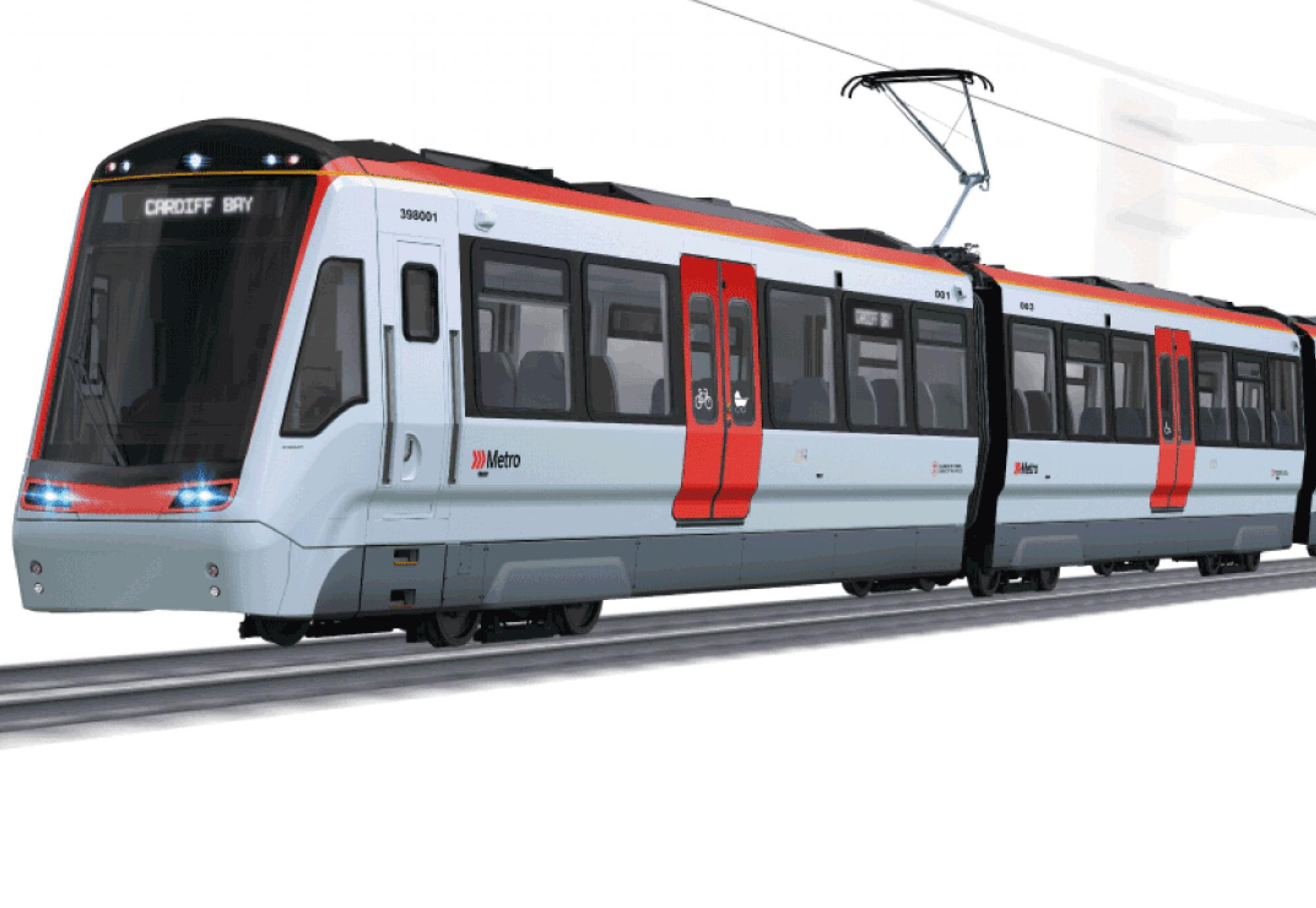
But I wouldn’t put too much faith in Environment Canterbury to come to the table on that one. They’ve been doing business cases on rail since before I was born, and haven’t pulled anything worthwhile out of the hat yet.
In truth, Environment Canterbury might be the worst body as it currently stands to be in charge of regional rail.
Its urban councillors are largely not transport advocates as it stands, or have decided to heavily politicise their preferred option for rail over realistic options. Its rural councillors seem hellbent on forgoing any investment that would benefit their communities.
In my opinion, Environment Canterbury has effectively abdicated its role as our region’s public transport authority, and I do not expect this new council to make major change on that front.
If the past week has shown how little this Government appreciates the benefits of rail, I don’t have any faith in them either.
If you want a good breakdown, I recommend the good people over at Greater Auckland who have done a thoroughly enjoyable two-part read on the real cost of National’s Roads of National Significance projects.

If this government was interested in projects that could provide for all New Zealanders, then they might use the term Infrastructure of National Significance.
However, the focus on roads shows you exactly where the vested donor interests are.
We need change in how our public transport is operated, and the funding models for interregional services. If Ōtautahi Christchurch is going to succeed, we need one all-powerful authority to cover all aspects of any service.
We need a government who will commit to providing these services not as a profit generator that has margins, but as a public good at an accessible price.
We need ambition. Our leaders currently lack it.
What could our future look like?
I’ve said it before, and I’ll say it again for as long as I have to: You can not plan transport projects in a vacuum.
Some politicians in Ōtautahi Christchurch are of the mindset that Mass Rapid Transit and Commuter Rail are incompatible, and we can only have one. That’s a dangerously dumb mindset to have, as they should serve completely different population bases and functions.
Mass Rapid Transit, and I prefer Light Rail/Trams for many reasons over Bus Rapid Transit, is a city builder. Wherever it goes, density follows. It has the power to shape our city in a way that heavy rail services never could.
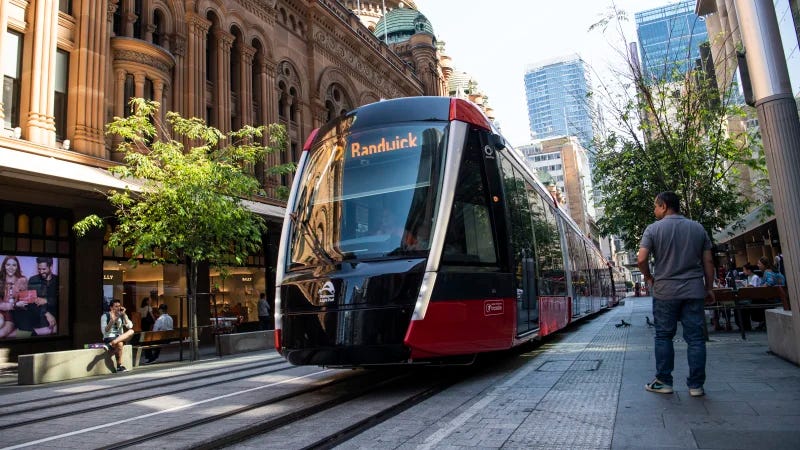
But Mass Rapid Transit is useless beyond the edge of our city. Services to Rangiora and Rolleston must compete with billions of dollars in motorway investment from the last decade, and therefore must operate in such a way that they are fast, punctual, and reliable.
The entirety of our services must be treated as one holistic network.
For a user, it matters that they can plan a journey across multiple modes, and have an ease of access and a reliable journey. Isolating service planning creates situations where services will not interlink as well, and will not take advantage of new infrastructure.
Ōtautahi Christchurch’s Major Cycle Route network is as key example of an area where major spines are sometimes poorly connected to local amenities and communities, because holistic planning hasn’t accounted for the environment around them. It’s all well and good to build one, but if a person can not safely get to it from their home, it’s not of much use to them.
All of these things must be taken together to build the ultimate package for a user.
I’d like to extend my thanks for an invitation to this panel.
These kinds of events help to inform the public around what needs to happen to build a bright future. I’m grateful to have been a part of it.
There’s a lot of work to be done in this space, and it’s important to include all voices in these projects. We need leaders in both local and central government who are willing to take the first steps towards this.
Spot on. I'd also add that Canterbury and the SI in general get a raw deal in infrastructure spending.
The only transport related large projects are the streamlining of Brougham St to remove an intersection so vehicles can transit it faster, and the hopeless Hope Bypass, and the soon to be tolled Woodend bypass.
Nothing at all for providing the so-called choice the Atlas politicians profess to worship.