Missing Links Part II: The Slow Train to Anywhere?
Falling out of love with rail has cost this country a better way of getting around.

I first started this series in my third article: Missing Links: Part I - A True East Coast Connection. For a series about missing things, it seems appropriate that it has almost taken a year for me to write the second installation.

A mark of a functioning state is the ability to provide and maintain vital infrastructure. If Intercity transit was a course at Canterbury University, New Zealand would have had a C- GPA for the last 20 years.
For a country built on the back of the Iron Horse, we sure have lost our understanding of what that can offer for us in the modern era.
With Christchurch set to grow faster and faster, we need to acknowledge that rail must form the backbone of our transport network, both inter-regionally, and within metropolitan areas. Our communities can not afford to drown in traffic any longer.
Profits Before People
Aotearoa New Zealand’s rail network falls short in so many ways. Even before you discuss the issues around infrastructure age, political willpower, and demand, you have to discuss that we as a country have lost our understanding of what it means to travel by train.
Following privatisation and purchase by Wisconsin Central’s TranzRail, services were slashed en masse to make way for a profit-driven model. These services included:
The Bay Express: Wellington - Napier (2001)
The Geyserland: Auckland - Rotorua (2001)
The Kaimai Express: Auckland - Tauranga (2001)
The Waikato Connection: Auckland - Hamilton (2001)
The Southerner: Christchurch - Dunedin - Invercargill (2002)
The Northerner: Wellington - Auckland (2004)
This left the country with:
The TranzAlpine: Christchurch - Greymouth
The TranzCoastal (now Coastal Pacific): Christchurch - Picton
The Overlander (now Northern Explorer): Wellington - Auckland
Despite the return of rail operations to the Crown under KiwiRail, of the half dozen services withdrawn, only one has seen a restoration in Te Huia; which fills the market as a new service to reinstate the Auckland - Hamilton link.
Of the remaining services, a single-passenger ticket in one direction will set you back NZD$219.
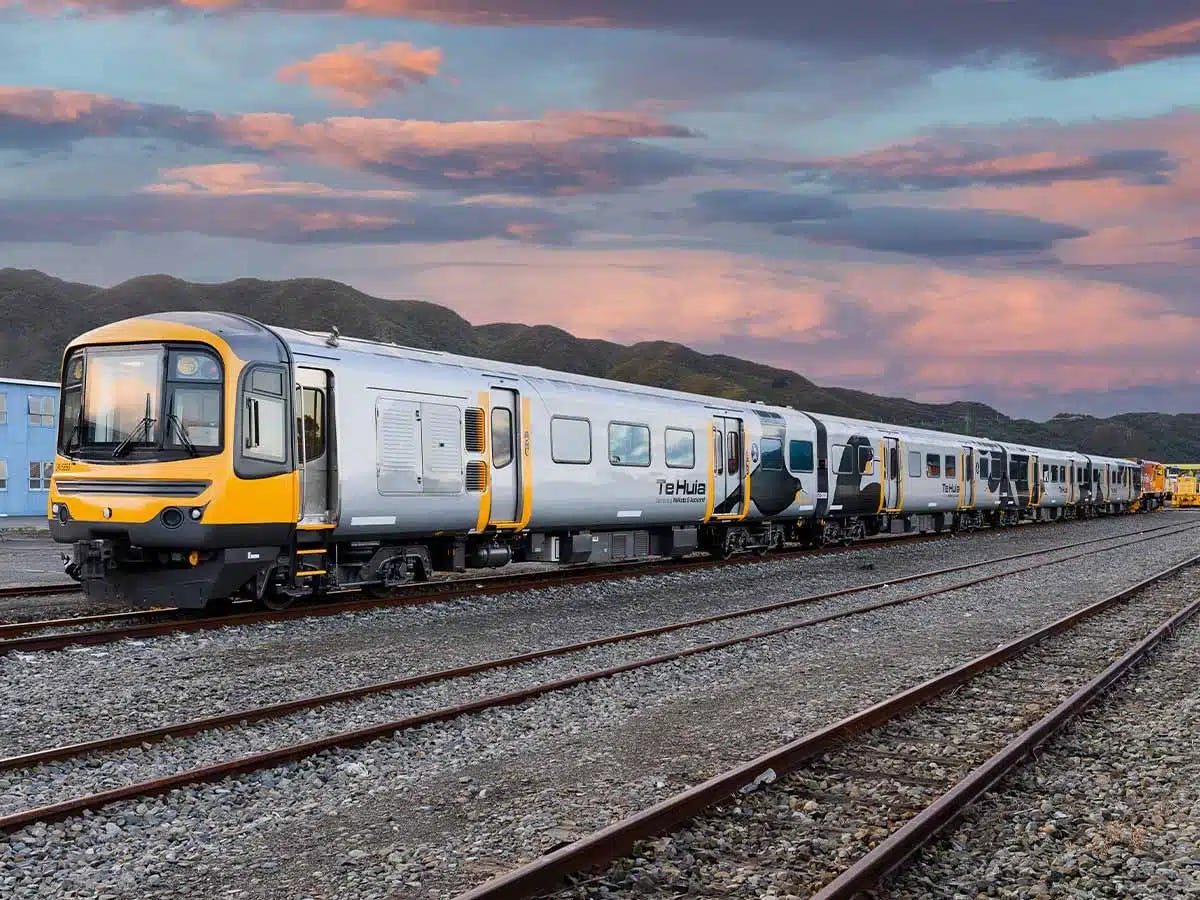
This is also dependent on your time of travel, as aside from Te Huia, other services operate in either a 1 train per day model or operate reduced hours over winter. It’s hardly an ideal situation for a casual traveller looking for an easy trip.
To make a more direct comparison, Amtrak’s Adirondack (see my review of it below) makes one trip a day over 381mi (~600km) in 12 hours, between two major metropolises (New York and Montreal) serving local communities at all times of the year, and only costs the rider USD$100 (NZD$167).
Recollections of an Impossible Journey

As I stepped out into the cold winter morning on 40th Street in New York, I had a giddy sense of anticipation. 7 blocks down 8th Avenue awaited New York Penn Station, and within it; opportunity.
The TranzAlpine makes one return trip per day over 223 kilometres (139 mi) in 5 hours, between a major metropolis and a regional centre, with a seasonably dependent timetable and poor community connections, and costs the rider at least NZD$219 (USD$131).
One seems like it’s a bit more value for money, right?
At least you can catch a train inter-regionally in some parts of the South Island.
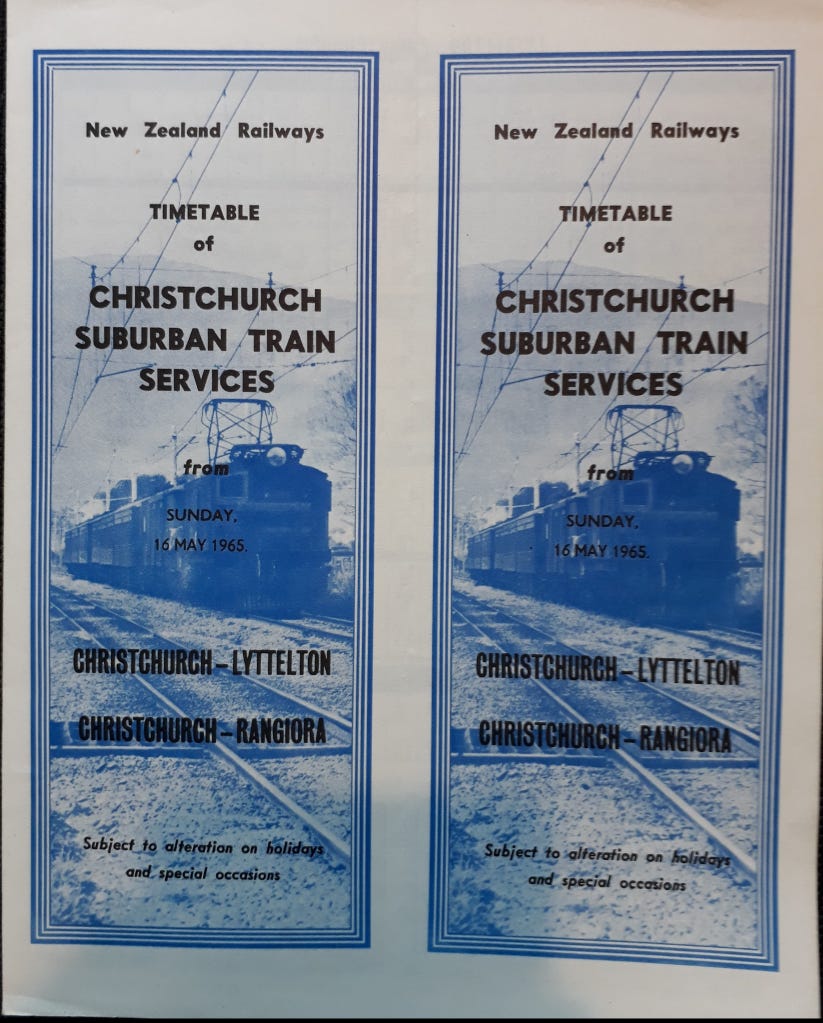
For commuters, there is no alternative rail option. Christchurch hasn’t seen a commuter train since 1976. Despite multiple business cases, political support has fluctuated from Wellington. Both major parties have failed to rise to the occasion for decades, with blame being thrown both ways.
Overcoming Inertia
New Zealand and rail transport need a bit of couple’s counselling.
We have come to accept that in this country that rail simply can not work, mainly because it doesn’t work now. We have the New Zealand Railways Corporation to thank for that.
But flying has become expensive at best (and prohibitively so in many cases), with heavy security and cramped quarters. To drive is to weave through a labyrinth of poorly maintained roads while partaking in a white-knuckle grip game of chicken with large trucks. Neither are options to be envied.
Road death tolls show us that increasingly, New Zealand’s roads are becoming less safe for the average driver. Carbon emissions tell us that we must investigate more appropriate ways of getting around. Regional leaders beg for more investment in their communities and for better connectivity.
We must stop treating passenger rail as a third-rate option. No major metropolis is outside the realms of an intercity service with another, and many are already deprived of transport options.
Increasingly, a return of passenger rail has more and more benefits as a society. As we experience population growth in the regions, the idea of regular service between our cities and regions gains traction. Commuter rail offers an appealing and reliable alternative to long commutes, both for commuters and the communities they travel through.
For those who are appealed to by business cases and stats, I direct you to Cameron Matthew’s “How to beat a business case: South Island Regional Rail (feat: visions for Ōtautahi MRT)”.

Despite these benefits, naysayers argue that any such reintroduction is prohibitively expensive in terms of capital infrastructure and would see low patronage for initial periods. Some MPs have called it a “pie in the sky” idea while they pillage our back pockets to build a new motorway.
Common sense must prevail.
Build, Baby, Build
The most ridiculous arguments against rail is that we “simply can’t do it/afford it/make it work”. As if this country, and especially Waitaha Canterbury weren’t built on the back of the Iron Road.
Ministers of the Government have repeatedly tut-tutted plans by ECan for restored services as unrealistic, or lied that they would be restricted by capacity. The truth: they have other transport priorities they want funded.
In the case of one Minister, he has spent a decade campaigning for a bypass motorway around Woodend. That project is now breaking ground, with what is expected to be a mediocre benefit-cost ratio (BCR). It is also likely to be tolled to recoup costs.
One could imagine he would lose face if his pet project didn’t work out because people chose rail over road. And so he decries attempts at moving it forward as unrealistic, and outside ECan’s remit (Public Transport is one of the few things ECan is entirely responsible for).
This kind of politicking is petty and only serves to kneecap our region. We need to look forward and actually do something about it.

Not only are we no stranger to reusing rolling stock, most interregional and commuter stock pulled by locomotives are ex-British Rail Mark 2 coaches. With a new generation of European DMUs being introduced in the Class 197 and the Class 755 FLIRT, there is likely to be opportunities arising for second-hand stock.
As for the state of the rails, the Government has needed to invest more in physical infrastructure for decades. With multiple bridges approaching end of life on the Main South Line, it’s about time we got something more than the crumbs we currently have. New stations at Kaiapoi, Belfast, Papanui, Hornby, and Templeton would be on the list, as well as upgrades to Rangiora, Christchurch, and Rolleston.

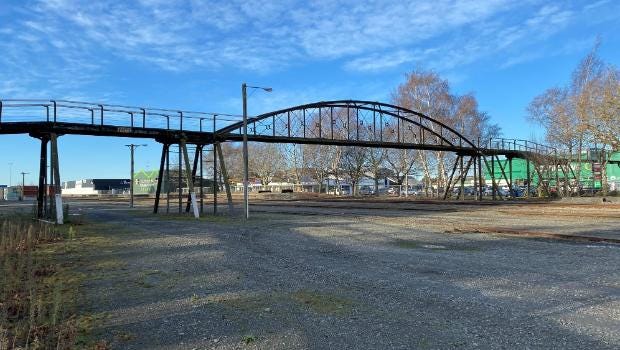
And as for the discussion around the placement of the station in Addington, it’s less than a 10 minute bike ride from Detroit Place (where the Turner’s site backs onto the station site) to the Bridge of Remembrance.
Perhaps we should use this city’s land for more than just car sales yards.
A new platform and a revamped station on that site would both open up the city-side access, but also open discussions for a reinstatement of the eastern leg of the Addington Junction triangle, opening up running access to the CBD from the North as a possibility. Add in priority public transport connections, and suddenly, it really isn’t that big of an issue.
You just need a bit of drive and some imagination.
Our city deserves that much at least.
Excellent post. Interesting idea with the 158's/159's, maybe abit more difficult to regauge a motor bogie.
I always thought s/h Japanese equipment would be ideal , but apparently it is too big for our loading gauge . but I would have thought the main routes proposed don't have any Vogel era tunnels.
Why isn't the corner of Moorehouse/Colombo proposed as the CBD rail stop? Lots of spare land there, it would just require a pedestrian underpass, or turn-only for Colombo St traffic for pedestrians to travel under the existing overpass. Am I missing something?